
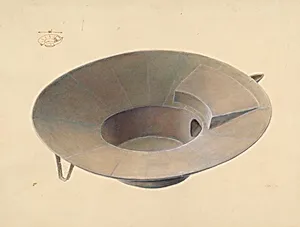
Tin Bath Tub
c. 1937
Medium
watercolor, gouache, and graphite on paper
Dimensions
overall: 22.3 x 29.6 cm (8 3/4 x 11 5/8 in.) Original IAD Object: 10 1/2" high; 38" in diameter; center well: 18" in diameter; outer flange: 12" wide; seat: 11 1/2" wide; 8 1/2" deep; outlet: 3" wide; brace: 8 1/2" high.
Classification
Index of American Design
Department
CG-W
Museum
National Gallery of Art, Washington, D.C.
Credit
Index of American Design
Accession Number
1943.8.8646
Rights
Public Domain
Art Historical Context
Gordon Saltar's *Tin Bath Tub* (c. 1937) captures the humble charm of an everyday American household object from the early 20th century.ed in watercolor, gouache, and graphite paper (22.3 x 29.6 cm), this precise depiction showcases a portable tin bathtub—measuring 10 1/2 inches high and 38 inches in diameter with a center well of 18 inches and practical features like an 8 1/2-inch-deep seat and 3-inch outlet. Created as part of the Index of American Design (IAD), a WPA Federal Art Project initiative (1935–1942), the artwork documents vernacular American crafts during the Great Depression, preserving designs that reflected practical ingenuity. The IAD employed artists like Saltar to meticulously record folk art, decorative objects, and industrial designs, promoting national pride in everyday creativity. Tin bathtubs like this one were staples in rural and working-class homes before widespread indoor plumbing, symbolizing self-reliant domestic life. Saltar's use of gouache for bold, opaque highlights and watercolor for subtle shading, combined with graphite for fine lines, lends a lifelike quality, making the functional tub appear almost sculptural. Housed in the National Gallery of Art's collection, this piece highlights how ordinary items embodied American resourcefulness, inviting visitors to appreciate the artistry in the mundane.