
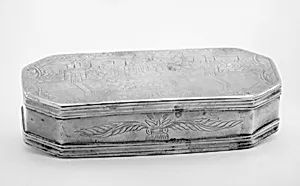
Tobacco box
Unknown Artist
18th century
Medium
Brass, copper
Dimensions
1 7/16 x 2 1/4 x 6 in. (3.7 x 5.7 x 15.2 cm)
Classification
Metalwork-Brass
Culture
Dutch
Department
European Sculpture and Decorative Arts
Museum
Metropolitan Museum of Art, New York, NY
Credit
Bequest of Flora E. Whiting, 1971
Accession Number
1971.180.220
Rights
Public Domain
Tags
Art Historical Context
This exquisite 18th-century Dutch box, crafted from brass and copper, exemplifies the metalwork of the Netherlands during a prosperous era of trade and craftsmanship. Measuring just 1 7/16 x 2 1/4 x 6 inches, its compact, portable form was designed for carrying pipe tobacco or snuff—a luxury habit popularized after tobacco's arrival from the Americas in the17th century. Adorning its surface are intricate depictions of buildings, likely rendered through techniques like chasing, engraving, or repoussé, which highlight the skill of anonymous Dutch artisans in transforming everyday objects into decorative treasures. In the context of European decorative arts, such boxes were status symbols for the emerging middle class, blending functionality with artistry. Dutch metalworkers excelled in these mixed-metal pieces, where brass provided durability and copper added rich patina and detail. This example reflects the cultural vibrancy of the Dutch Golden Age's aftermath, when tobacco culture permeated social life from taverns to homes. Now part of the Metropolitan Museum of Art's European Sculpture and Decorative Arts collection—thanks to the 1971 bequest of Flora E. Whiting—this modest yet masterful object invites us to appreciate the artistry in the ordinary, bridging personal indulgence with historical ingenuity.