
Tobacco Box
1816
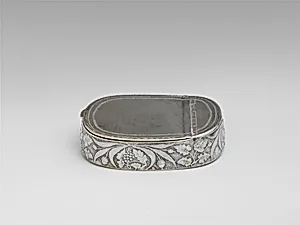
Medium
Silver
Dimensions
1/2 x 2 3/4 x 2 3/16 in. (1.3 x 7 x 5.6 cm); 2 oz. 9 dwt. (76.8 g)
Classification
Box
Culture
American
Department
The American Wing
Museum
Metropolitan Museum of Art, New York, NY
Credit
Bequest of Charles Allen Munn, 1924
Accession Number
24.109.41
Rights
Public Domain
Art Historical Context
Nestled in The American Wing of the Metropolitan Museum of Art this exquisite *Tobacco Box* crafted by John Erwin in 1816 exemplifies the refined silversmithing of early 19th-century. Measuring a compact 1/2 x 2 3/4 x 2 3/16 inches and weighing just over 2 ounces, the box was designed for portability, likely to hold snuff—a finely ground tobacco popular among gentlemen of the era. Erwin, an American artisan, fashioned it from silver, a precious metal prized for its durability, luster, and status as a luxury good in a young nation eager to rival European elegance. Silver tobacco boxes like this one were more than mere containers; they were personal accessories symbolizing sophistication and social standing. In 1816, post-War of 1812 America was experiencing economic growth and a burgeoning interest in fine crafts, with silversmiths employing techniques like hammering, chasing, and possibly engraving to create functional yet decorative objects. This piece reflects the neoclassical influences of the Federal period, where clean lines and subtle ornamentation celebrated republican virtues. Bequeathed to the Met in 1924 by Charles Allen Munn, the box offers a tangible glimpse into everyday elite life, highlighting American ingenuity in miniature masterpieces. Visitors can appreciate how such items bridged utility and artistry, preserving cultural rituals amid a changing world.