
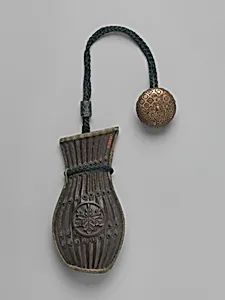
Tobacco pouch
Unknown Artist
18th century
Medium
Iron
Dimensions
L. 4 3/4 in. (12.1 cm); W. 2 3/8 in. (6 cm)
Classification
Tobacco Pouches
Culture & Period
Japan · Edo period (1615–1868)
Department
Asian Art
Museum
Metropolitan Museum of Art, New York, NY
Credit
The Howard Mansfield Collection, Gift of Howard Mansfield, 1936
Accession Number
36.120.667
Rights
Public Domain
Art Historical Context
This exquisite iron tobacco pouch hails from Japan's Edo period (1615–8), a time of peace and cultural flourishing under the Tokugawa shogunate. Introduced by Portuguese traders in the late th century, tobacco quickly became a fashionable social habit among samurai, merchants, and townsfolk. Compact at 4¾ inches long and 2⅜ inches wide, this pouch—known as a *tabako ire*— designed to hold finely shredded tobacco leaves, carried alongside a pipe (*kiseru*) tucked into one's kimono sash. Crafted from iron by an unknown artisan, the pouch exemplifies the meticulous metalworking skills of Edo-era craftsmen. Iron was a durable yet challenging medium, often hammered, engraved, or inlaid to create functional yet elegant accessories that doubled as subtle status symbols. These pouches reflected the era's blend of utility and artistry, bridging everyday life with the refined aesthetics of urban Japan. Today, this piece from The Howard Mansfield Collection graces the Metropolitan Museum of Art's Asian Art department, offering a tangible glimpse into 18th-century Japanese customs and the ingenuity of its anonymous makers.