
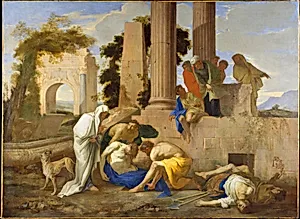
Tobit Burying the Dead
1640s
Medium
Oil on canvas
Dimensions
50 1/4 x 68 1/2 in. (127.6 x 174 cm)
Classification
Paintings
Department
European Paintings
Museum
Metropolitan Museum of Art, New York, NY
Credit
Gwynne Andrews Fund, 1989
Accession Number
1989.225
Rights
Public Domain
Tags
Art Historical Context
Andrea di Lione's *Tobit Burying the* (1640s), an imposing oil on canvas measuring over 5 by 5½ feet, captures a poignant biblical scene from the Book of Tobit in the Apocrypha. The Neapolitan artist, influenced by Caravaggio's dramatic tenebrism, depicts the pious Jew Tobit defying Assyrian king Sennacherib's decree by ritually burying slain countrymen at night. Amid ancient ruins, muscular men labor with shovels and picks, a loyal dog stands watch, and the stark interplay of light and shadow evokes themes of death, faith, and moral courage. Lione's Caravaggesque style shines through in the realistic figures, earthy tones, and bold chiaroscuro that heighten the emotional intensity. Painted during Naples' Baroque era under Spanish rule—a time of plague and social upheaval—the work reflects the city's tenebrist tradition, emphasizing human vulnerability and divine piety. The ruins symbolize imperial decay, contrasting Tobit's steadfast humanity. Acquired by the Metropolitan Museum of Art through the Gwynne Andrews Fund in 1989, this masterpiece invites visitors to ponder timeless acts of compassion amid adversity, blending historical drama with visceral artistry.