
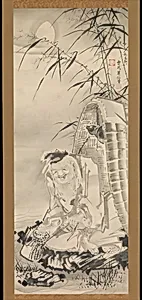
曽我蕭白筆 太公望図|Tōkaibō with a Fishing Basket
ca. 1768
Medium
Hanging scroll; ink on paper
Dimensions
Image: 52 1/2 in. × 21 in. (133.4 × 53.3 cm) Overall with mounting: 80 × 25 3/16 in. (203.2 × 64 cm) Overall with knobs: 80 × 27 1/4 in. (203.2 × 69.2 cm)
Classification
Paintings
Culture & Period
Japan · Edo period (1615–1868)
Department
Asian Art
Museum
Metropolitan Museum of Art, New York, NY
Credit
Gift of Florence and Herbert Irving, 2015
Accession Number
2015.500.9.4
Rights
Public Domain
Tags
Art Historical Context
Behold *Tōkaibō with a Fishing Basket* (ca. 1768), a striking hanging scroll in ink on paper by the visionary Edo-period painter Soga Shōhaku (1730–1781). work captures Tōkaibō—better known as Taigong, the legendary Chinese sage and strategist Lü Shang—who patiently fished not for sustenance but for a worthy ruler, symbolizing wisdom and perseverance. Rendered in monumental scale (image 52½ × 21 inches), the scroll exemplifies traditional Japanese formats for display in homes or temples during the Edo period (1615–1868), evoking a sense of timeless reverence. Shōhaku, a master of the individualistic Nanga (Southern School) style influenced by Chinese literati painting, infuses the figure with dynamic energy through his signature bold, expressive brushwork. Thick, swirling ink strokes animate Tōkaibō's robes and basket, creating a sense of movement and otherworldly power that sets Shōhaku apart from more refined contemporaries. His unconventional approach revived the dramatic spirit of earlier Soga school artists while pushing boundaries with raw, almost calligraphic intensity. Housed in the Metropolitan Museum of Art's Asian Art Department (gift of Florence and Herbert Irving, 2015), this painting highlights Japan's rich fusion of Daoist lore and artistic innovation. For visitors, it offers a window into Edo-era fascination with heroic sages, reminding us that true mastery often lies in patient waiting.
About the Artist
Soga Shōhaku · 1730–1781
Japanese, 1730–1781