
Toleware Coffee Pot
c. 1940
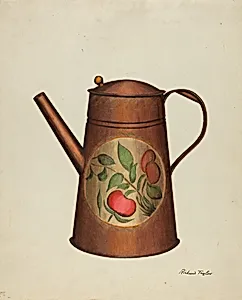
Medium
watercolor and graphite on paperboard
Dimensions
overall: 36.6 x 29.7 cm (14 7/16 x 11 11/16 in.) Original IAD Object: 6 1/2" in diameter; 11" high
Classification
Index of American Design
Department
CG-W
Museum
National Gallery of Art, Washington, D.C.
Credit
Index of American Design
Accession Number
1943.8.15174
Rights
Public Domain
Art Historical Context
Behold the *Toleware Coffee Pot*, a meticulous 1940 watercolor and graphite rendering by artist Richard Taylor, capturing the charm of an 18th- or 19th-century American folk craft object. Measuring 36.6 x 29.7 cm, this detailed depiction—originally of a pot 6½ inches in diameter and 11 inches high—comes from the Index of American Design, a landmark WPA Federal Art Project (1935–1942). During the Great Depression, artists like Taylor documented everyday American decorative arts, preserving cultural heritage through precise, vibrant illustrations for posterity. Toleware, or japanned tinware, emerged in colonial America as an affordable, colorful alternative to imported wares. Craftsmen hand-painted sturdy tin with floral motifs, lacquer finishes, and bright enamels, turning utilitarian items like coffee pots into household treasures. Taylor's artwork highlights this tradition's blend of functionality and folk artistry, reflecting the ingenuity of American makers who democratized elegance for the masses. Housed in the National Gallery of Art's collection, this piece exemplifies the Index's mission to celebrate vernacular design. Its watercolor washes and graphite outlines convey texture and sheen, inviting viewers to appreciate the enduring appeal of America's crafted past amid modern life.