
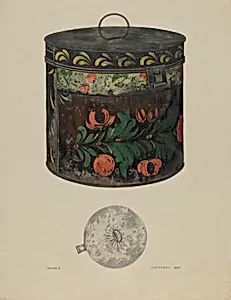
Toleware Tin Cannister
1937
Medium
watercolor and graphite on paperboard
Dimensions
overall: 35.6 x 27.9 cm (14 x 11 in.) Original IAD Object: 9" in diameter; 8 1/2" high
Classification
Index of American Design
Department
CG-W
Museum
National Gallery of Art, Washington, D.C.
Credit
Index of American Design
Accession Number
1943.8.15156
Rights
Public Domain
Art Historical Context
Behold the exquisite *Toleware Tin Cannister*, a 1937 watercolor and graphite rendering by artist Donald Humphrey, part of the National Gallery of Art's esteemed Index of American Design collection. Measuring 35.6 x 27.9 cm (14 x 11 in.), this detailed depiction captures a functional 19th-century American folk art object—originally 9 inches in diameter and 8½ inches high—showcasing the vibrant painted tinware known as toleware. Humphrey's precise technique highlights the canister's decorative floral motifs and glossy japanning, a lacquer finish that mimicked expensive porcelain and protected the tin from rust. Created during the Great Depression as part of the Federal Art Project under the Works Progress Administration, the Index of American Design (1935–1942) employed artists like Humphrey to document everyday American crafts through meticulous renderings. This preserved cultural heritage at a time when such utilitarian objects risked obscurity, celebrating the ingenuity of colonial and early American artisans who transformed humble tin into colorful household treasures. Toleware, popular from the late 1700s onward, reflected immigrant influences from Europe and served practical purposes like storing tea, sugar, or spices. Humphrey's work not only revives this tradition but invites us to appreciate the blend of utility and artistry in America's decorative past—a delightful window into bygone domestic life.