
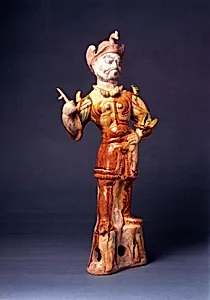
唐 彩繪三彩陶鎭墓武士俑|Tomb guardian
Unknown Artist
ca. late 7th–first half of the 8th century
Medium
Earthenware with three-color (sancai) glaze and pigment
Dimensions
H. 16 3/8 in. (41.6 cm)
Classification
Tomb Pottery
Culture & Period
China · Tang dynasty (618–907)
Department
Asian Art
Museum
Metropolitan Museum of Art, New York, NY
Credit
Gift of Stanley Herzman, in memory of Adele Herzman, 1991
Accession Number
1991.253.9
Rights
Public Domain
Tags
Art Historical Context
This striking Tomb Guardian, a painted earthenware warrior figurine from China's Tang dynasty (ca. 7th–first of the 8th), stands as a vivid testament to one of history's most prosperous eras. Crafted during the Tang's cosmopolitan golden age, when silk roads connected China to distant lands, these tomb pottery figures were buried with the elite to serve and protect in the afterlife. At 16⅜ inches tall, this muscular sentinel, clad in armor and ready for duty, embodies the dynasty's bold realism and love of grandeur. The artwork's medium—earthenware with sancai (three-color) glaze and pigment—is a hallmark of Tang innovation. Sancai, featuring creamy white, amber yellow, and green hues from lead-based glazes fired at low temperatures, allowed for fluid, dripping effects that mimic flowing robes and lively expressions. This technique revolutionized ceramics, blending functionality with artistry and symbolizing the Tang's technical prowess and aesthetic exuberance. Generously gifted to the Metropolitan Museum of Art in 1991, this piece invites us to ponder ancient beliefs in immortality, where even clay guardians ensured eternal vigilance. A window into Tang burial rituals, it reveals a culture that celebrated life even in death.