
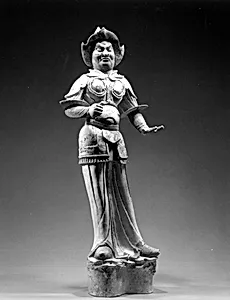
唐彩繪陶鎭墓武士俑|Tomb guardian
Unknown Artist
early 8th century
Medium
Earthenware with pigment
Dimensions
H. 31 3/4 in. (80.6 cm); W. 11 3/4 in. (29.8 cm)
Classification
Tomb Pottery
Culture & Period
China · Tang dynasty (618–907)
Department
Asian Art
Museum
Metropolitan Museum of Art, New York, NY
Credit
Charlotte C. and John C. Weber Collection, Gift of Charlotte C. and John C. Weber, 1994
Accession Number
1994.605.44
Rights
Public Domain
Tags
Art Historical Context
This striking Tomb Guardian, crafted in early 8th-century China during the Tang dynasty (–907), stands as a vigilant warrior figure made of earthenware coated with vibrant pigments. Measuring over 31 inches tall, it exemplifies *mingqi*—ceremonial tomb pottery designed to protect and serve the deceased in the afterlife. Placed near tomb entrances, these fierce guardians warded off evil spirits, reflecting the Tang belief in an eternal, mirrored existence beyond death. The Tang era, a golden age of cosmopolitanism and artistic innovation, produced some of China's most lifelike tomb figures. Artisans molded the clay body with remarkable realism, capturing the warrior's muscular stance, detailed armor, and stern expression before applying mineral pigments for vivid coloration. Though unglazed, the paintwork mimics the dynasty's famed *sancai* (three-color) glazes, highlighting technical mastery in low-fired earthenware that preserved bold hues over centuries. Housed in the Metropolitan Museum of Art's Asian Art collection, this piece from the Charlotte C. and John C. Weber gift offers a window into Tang society's martial prowess and spiritual devotion. Such figures not only honored the elite but also celebrated the era's cultural fusion of Central Asian influences, making this guardian a timeless sentinel of history.