
"Tomb of Rousseau"
ca. 1790
Medium
Cotton
Dimensions
L. 104 x W. 38 inches 264.2 x 96.5 cm
Classification
Textiles-Printed
Culture
French, Nantes
Department
European Sculpture and Decorative Arts
Museum
Metropolitan Museum of Art, New York, NY
Credit
Rogers Fund, 1930
Accession Number
30.89
Rights
Public Domain
Tags
Art Historical Context
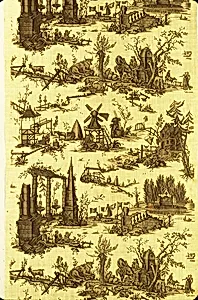
Welcome to the Metropolitan Museum of Art's European Sculpture and Decorative Arts collection, where you'll find the striking printed cotton textile *Tomb of Rousseau* by Petitpierre et Cie, a renowned firm from Nantes, France, circa 1790. Measuring an impressive 104 by 38 inches, this vividly patterned fabric captures a pastoral scene featuring Rousseau's tomb amid windmills, grazing cows, trees, and other animals. Created during the eve of the French Revolution, it reflects the era's fascination with Jean-Jacques Rousseau, the Enlightenment philosopher whose ideas on nature and simplicity inspired Romanticism. Nantes was a hub for innovative textile printing in the late 18th century, producing "indiennes"—cotton fabrics block-printed or copperplate-printed with intricate, colorful designs for upholstery, clothing, and wall hangings. Petitpierre et Cie's technique allowed for detailed, narrative landscapes that brought literary and natural motifs into everyday homes, blending utility with artistry. This piece exemplifies how printed textiles democratized decorative arts, making sophisticated imagery accessible beyond elite circles. Fun fact: Rousseau's actual tomb on the Île des Peupliers symbolized his return to nature, and such depictions on fabric turned personal reverence into public decor. Acquired through the Rogers Fund in 1930, it offers a window into pre-Revolutionary French culture and craftsmanship.