
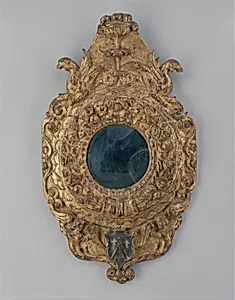
Tondo mirror frame
ca. 1490–1500
Medium
Poplar; carved, gilt; deep red-brown bole.
Dimensions
Overall: 24 1/4 × 14 3/16 in. (61.6 × 36 cm) Diameter (Sight): 6 in. (15.2 cm) Diameter (Rebate): 7 1/16 in. (17.9 cm)
Classification
Frames
Culture
Italian, Siena
Department
Robert Lehman Collection
Museum
Metropolitan Museum of Art, New York, NY
Credit
Robert Lehman Collection, 1975
Accession Number
1975.1.2101
Rights
Public Domain
Tags
Art Historical Context
This exquisite *Tondo mirror frame* Siena, Italy, dates to around 1490–1500, a vibrant period when the city thrived as a Renaissance hub known for its intricate decorative arts. Crafted during Siena's transition from Gothic opulence to Renaissance elegance, the frame once encircled a circular (tondo) mirror, a popular luxury item evoking classical antiquity and symbolizing introspection and status among the elite. Made of poplar wood, it masterful carving, gilding, and a deep red-brown bole—a clay ground that creates a luminous, warm undertone beneath the gold leaf. Delicate motifs of birds and a coat of arms adorn its surface, likely heralding a noble family's lineage and adding personal prestige. The frame's modest sight diameter of 6 inches fits neatly into domestic settings, while its overall rectangular form (24¼ × 14⅛ inches) allowed for elegant wall display. As part of the Robert Lehman Collection at The Metropolitan Museum of Art, this frame highlights how Renaissance frames were not mere supports but sculptural masterpieces integral to art presentation. In Siena's competitive artistic scene, such objects blended functionality with heraldry, reflecting the era's blend of piety, pride, and refined craftsmanship.