
Tool
Unknown Artist
5th–3rd millennium BCE
Medium
Copper
Dimensions
0.79 x 2.87 in. (2.01 x 7.29 cm)
Classification
Metalwork-Implements
Culture & Period
Iran · Chalcolithic–Early Bronze Age
Department
Ancient Near Eastern Art
Museum
Metropolitan Museum of Art, New York, NY
Credit
Rogers Fund, 1938
Accession Number
38.40.393
Rights
Public Domain
Art Historical Context
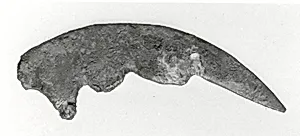
This unassuming copper tool, dating to the Chalcolithic–Early Age (5th–3rd millennium BCE), hails from ancient Iran and offers a window into one of humanity's pivotal technological leaps. Crafted during a time when communities in the Ancient Near East transitioned from stone to metal, it exemplifies early metalworking in the region. Measuring just 0.79 x 2.87 inches, its petite scale suggests it was a practical implement—perhaps an awl, chisel, or scraper—used in daily crafts like woodworking or leatherworking. The medium of copper is key to its significance. The Chalcolithic period, meaning "copper-stone," marked the first widespread smelting and shaping of native copper, blending old stone tools with innovative metallurgy. This artifact, acquired through the Rogers Fund in 1938 and housed in the Metropolitan Museum of Art's Ancient Near Eastern Art department, highlights Iran's role in these advancements, predating full Bronze Age alloys and influencing trade networks across Mesopotamia and beyond. Though simple, this tool whispers of ingenuity: cold-hammered or cast from ore, it survives millennia to remind us how humble objects fueled cultural progress. A testament to early innovation!