
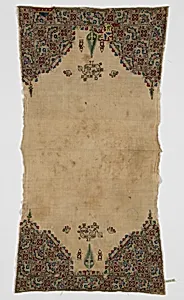
Towel
Unknown Artist
18th century
Medium
Linen, silk; plain weave, embroidered
Dimensions
H. 29 in. (73.7 cm) W. 15 in. (38.1 cm)
Classification
Textiles-Embroidered
Department
Islamic Art
Museum
Metropolitan Museum of Art, New York, NY
Credit
Edward C. Moore Collection, Bequest of Edward C. Moore, 1891
Accession Number
91.1.8
Rights
Public Domain
Tags
Art Historical Context
This exquisite 18th-century towel from the Islamic world exemplifies the artistry of embroidered textiles, crafted from linen and silk using a plain weave foundation. Measuring 29 inches high by 15 inches wide, compact size suggests it was likely a personal hygiene item, such as a hand towel used in hammams or households. The delicate embroidery, featuring bird motifs, highlights the intricate needlework traditions prevalent in Ottoman or Persian regions during this period, where such objects blended utility with beauty. In Islamic art, embroidery on textiles served both practical and decorative purposes, often adorning everyday items with symbolic natural motifs like birds, which evoked paradise gardens or spiritual themes from Quranic imagery. The plain weave provided a sturdy, smooth base ideal for fine stitching, allowing artisans—likely skilled women in workshops or homes—to create vibrant, durable patterns with silk threads for luster and contrast. Acquired through the Edward C. Moore Collection and now housed in The Metropolitan Museum of Art's Islamic Art department, this towel offers a glimpse into the refined craftsmanship of pre-modern Islamic societies. Its preservation underscores the cultural value placed on textiles as portable expressions of faith, status, and aesthetic harmony.