
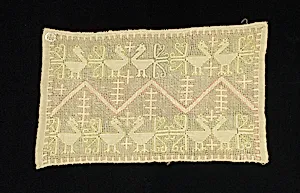
Towel border
Unknown Artist
1800–1850
Medium
Linen, silk
Dimensions
13 x 8 1/2 in. (33.0 x 21.6 cm)
Classification
Textiles-Laces
Culture
Russian
Department
European Sculpture and Decorative Arts
Museum
Metropolitan Museum of Art, New York, NY
Credit
Brooklyn Museum Costume Collection at The Metropolitan Museum of Art, Gift of the Brooklyn Museum, 2009; Gift of Mrs. Edward S. Harkness in memory of her mother, Elizabeth Greenman Stillman, 1931
Accession Number
2009.300.6317
Rights
Public Domain
Tags
Art Historical Context
This exquisite towel border, crafted by an unknown Russian artist between 1800 and 1850, is a fine example of early 19th-century lacework in linen and silk. Measuring 13 x 8½ inches (33 x 21.6 cm), it as a decorative edging for household linens like towels, transforming everyday items into cherished objects of beauty. Classified among textiles-laces in the Metropolitan Museum of Art's European Sculpture and Decorative department, its delicate construction highlights the precision of traditional needle techniques. In Russian culture during this period, lacemaking flourished as both a domestic craft and a marker of social refinement, often featuring motifs like birds—evident in this piece—to evoke nature's grace and folklore. These borders adorned linens used in rituals or daily life, blending functionality with artistry and showcasing the skill of anonymous makers, likely women preserving regional traditions amid imperial expansion. Today, this artifact, part of the Brooklyn Museum Costume Collection gifted to the Met in 2009 (originally from Mrs. Edward S. Harkness in 1931), reminds us of the overlooked artistry in decorative textiles, bridging personal heritage with museum treasures.