
Towel End
Unknown Artist
early 19th century
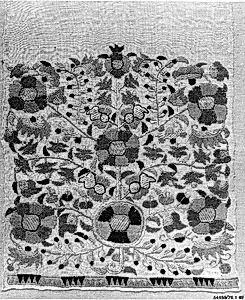
Medium
Linen, silk, metal wrapped thread; plain weave, embroidered
Dimensions
H. 18 in. (45.7 cm) W. 10 in. (25.4 cm)
Classification
Textiles-Embroidered
Department
Islamic Art
Museum
Metropolitan Museum of Art, New York, NY
Credit
Anonymous Gift, 1879
Accession Number
79.1.49
Rights
Public Domain
Tags
Art Historical Context
This exquisite "Towel End" the early 19th exemplifies the refined artistry of Islamic textiles, likely crafted as a decorative border for a household towel. Housed in the Metropolitan Museum of Art's of Islamic Art, this piece measures 18 by 10 inches and entered the collection through an anonymous gift in 9. Its floral motifs, a hallmark of Islamic design, evoke the lush gardens of paradise—a recurring theme in the region's decorative arts, symbolizing beauty, fertility, and spiritual harmony. Woven in a plain weave of linen for durability, the towel end is richly embroidered with silk threads and shimmering metal-wrapped ones, creating intricate patterns that catch the light. This combination of materials highlights the technical mastery of anonymous artisans, probably women in domestic workshops, who blended functionality with opulence. The embroidery technique allowed for fine detail, transforming everyday linens into cherished heirlooms. In the context of early 19th-century Islamic culture—spanning regions like the Ottoman Empire or Persia—these textiles were essential to daily life and hospitality rituals, showcasing community craftsmanship and aesthetic values. Today, it offers visitors a tactile glimpse into a world where art adorned the intimate spaces of home.