
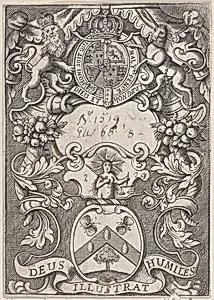
Trade Card with Royal Coat of Arms
19th century
Medium
Engraving
Dimensions
Sheet: 5 13/16 × 4 1/8 in. (14.8 × 10.4 cm)
Classification
Prints|Ephemera
Department
Drawings and Prints
Museum
Metropolitan Museum of Art, New York, NY
Credit
The Elisha Whittelsey Collection, The Elisha Whittelsey Fund, 1949
Accession Number
49.6.9
Rights
Public Domain
Art Historical Context
Step into the vibrant world of 19th British commerce with this enchanting *Trade Card with Royal Coat of Arms*, anonymous engraving from the Metropolitan Museum of's Elisha Whittelsey Collection. Measuring a compact 5 13/16 × 4 1/8 inches, this delicate print exemplifies ephemera—those everyday printed treasures that once fluttered from shop counters into eager hands. Trade cards like this were promotional gems, distributed by businesses to advertise goods, often collected like trading cards by enthusiasts. The card's centerpiece, the majestic Royal Coat of Arms, underscores its cultural prestige. Featuring the iconic symbols of the British monarchy—such as the lion and unicorn—this heraldic emblem lent an air of royal endorsement to the issuer's wares, a clever marketing tactic in Victorian Britain. Engraving, the medium here, allowed for intricate, precise lines that captured the arms' elaborate details with crisp elegance, a technique perfected in the era's print workshops for mass reproduction. As a snapshot of everyday life, this unassuming artifact reveals how ordinary trade blended with regal symbolism, bridging art, commerce, and national pride. Housed in the Met's Drawings and Prints department, it invites us to ponder the hidden stories behind the ephemera we discard today.
About the Artist
Anonymous, British, 19th century · 1800–1900
**Anonymous, British, 19th century** is not the name of a single individual but a standard museum attribution used for works whose creators remain unidentified yet are clearly British and date to the 1800s. Major institutions, including the Metropolitan Museum of Art, employ this designation for hundreds of drawings, prints, designs, and decorative studies that lack signatures or firm documentary ...