
Tray
Unknown Artist
14th century
Medium
Brass; originally inlaid with silver
Dimensions
H. 1 3/8 in. (3.5 cm) Diam. 17 15/16 in. (45.6 cm)
Classification
Metal
Department
Islamic Art
Museum
Metropolitan Museum of Art, New York, NY
Credit
Edward C. Moore Collection, Bequest of Edward C. Moore, 1891
Accession Number
91.1.533
Rights
Public Domain
Art Historical Context
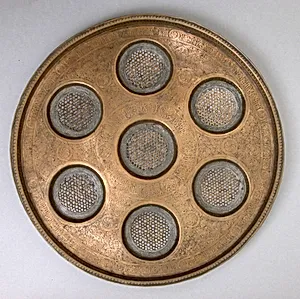
This elegant 14th-century brass tray, hailing from the Islamic world, exemplifies the exquisite metalwork traditions of the medieval period. Measuring nearly 18 inches in diameter and just over 1 inch in height, it was designed as a shallow serving vessel, likely used affluent households for presenting food, beverages, or offerings during communal gatherings. Its grand scale and refined form reflect the sophistication of Islamic artisans, who crafted such objects as symbols of hospitality and status. Crafted from brass and originally adorned with intricate silver inlays—a technique known as damascening or koftgari—the tray would have shimmered with elaborate engravings, possibly featuring calligraphy, floral motifs, or geometric patterns typical of the era. This labor-intensive process involved incising designs into the brass and hammering silver wire into the grooves, creating a luxurious contrast that highlighted the object's beauty and durability. In the Islamic art tradition, metalware like this flourished under patrons in regions such as Egypt and Syria during the Mamluk dynasty, blending functionality with artistic virtuosity. Now part of the Metropolitan Museum of Art's renowned Islamic Art collection, gifted through the Edward C. Moore bequest in 1891, this tray invites us to appreciate the anonymous master's skill and the enduring allure of medieval Islamic craftsmanship. Though the silver inlay has faded over centuries, its legacy endures as a testament to a golden age of innovation.