
Tray
Unknown Artist
19th century
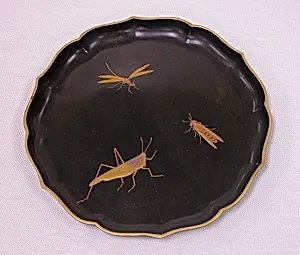
Medium
Lacquer with black ground, hiramakie design in gold and silver
Dimensions
H. 1/2 in. (1.3 cm); W. 6 1/2 in. (16.5 cm)
Classification
Lacquer
Culture & Period
Japan · Edo (1615–1868) or Meiji period (1868–1912)
Department
Asian Art
Museum
Metropolitan Museum of Art, New York, NY
Credit
Bequest of Stephen Whitney Phoenix, 1881
Accession Number
81.1.256
Rights
Public Domain
Tags
Art Historical Context
This elegant lacquer tray, created in Japan during the 19th century, reflects the refined artistry of the late Edo (1615–1868) or early Meiji (1868–1912) period. Measuring just half an inch high and six and a half inches wide, the shallow tray features a striking black ground adorned with a hiramakie design in gold and silver. This sophisticated technique involves sprinkling fine metal powders onto wet lacquer to create delicate, shimmering patterns, a method perfected by Japanese artisans over centuries. The tray’s design incorporates dragonflies, a motif often celebrated in Japanese art for its graceful forms and connection to nature. Such functional yet decorative objects were prized in domestic settings, highlighting the integration of beauty and utility in everyday life. Now part of the Metropolitan Museum of Art’s Asian Art collection through the 1881 bequest of Stephen Whitney Phoenix, it offers visitors a glimpse into Japan’s enduring lacquer tradition and the meticulous craftsmanship that defined this era.