
Trays
Unknown Artist
1850–80
Medium
Lacquer
Dimensions
H. 7 1/4 in. (18.4 cm); D. 1in. (2.5cm)
Classification
Lacquer
Culture & Period
Japan · Edo (1615–1868) or Meiji period (1868–1912)
Department
Asian Art
Museum
Metropolitan Museum of Art, New York, NY
Credit
Bequest of Stephen Whitney Phoenix, 1881
Accession Number
81.1.135f, h
Rights
Public Domain
Tags
Art Historical Context
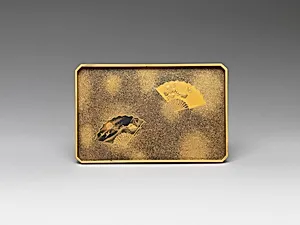
Welcome to the Asian Art galleries at the Metropolitan Museum of Art where we encounter exquisite "Trays" crafted by an unknown Japanese artist between 1850 and 1880. These delicate lacquer pieces, measuring just 7¼ inches high and 1 inch deep, exemplify the refined artistry of late Edo (1615–1868) or early Meiji (1868–1912) Japan. Adorned with motifs of birds and fans—symbols of grace, freedom, and seasonal elegance—they served as practical yet luxurious serving trays for tea ceremonies or daily rituals. Japanese lacquerware, made from the sap of the urushi tree, is a pinnacle of craftsmanship requiring dozens of thin, translucent layers applied over wood, each polished to a mirror-like sheen. This technique, honed over centuries, allowed for intricate decorations like raised designs or inlays, blending functionality with aesthetic beauty. During this transitional era, as Japan opened to the West, such objects bridged traditional isolationist aesthetics with emerging global influences, showcasing the enduring prestige of Edo-period refinement. Bequeathed in 1881 by collector Stephen Whitney Phoenix, these trays invite us to appreciate Japan's mastery of everyday luxury. Imagine them gliding across a tatami mat, carrying sweets amid cherry blossoms— a testament to art's power to elevate the ordinary.