
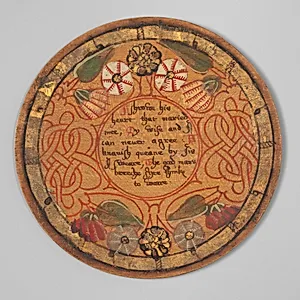
Trencher (one of a set)
Unknown Artist
late 16th–early 17th century
Medium
Oak and sycamore woods, painted, silvered and yellow varnished; inscription: ink (animal or vegetable)
Dimensions
Diameter: 5 in. (12.7 cm)
Classification
Natural Substances
Culture
British
Department
European Sculpture and Decorative Arts
Museum
Metropolitan Museum of Art, New York, NY
Credit
Gift of Irwin Untermyer, 1964
Accession Number
64.101.1568
Rights
Public Domain
Tags
Art Historical Context
This delicate trencher, one of a set from late 16th- to early 17th-century, exemplifies the everyday elegance of Tudor and Stuart dining. Measuring just 5 inches in diameter, these small wooden platters—known as trenchers—were used to serve individual portions of food, such as bread or cheese, before the widespread adoption of ceramic plates. Crafted during a time when communal feasting was central to social life, this piece reflects the blend of utility and ornamentation in English households. Made from oak and sycamore woods, the trencher is adorned with painted floral motifs (as suggested by its tags), enhanced by silvering and a yellow varnish for a luxurious sheen. An inscription in ink, likely derived from animal or vegetable sources, adds a personal or motto-like touch, showcasing skilled woodworking and decorative techniques. Such multi-layered finishes protected the wood from wear while elevating its aesthetic appeal. Housed in the Metropolitan Museum of Art's Department of European Sculpture and Decorative Arts (gift of Irwin Untermyer, 1964) and classified under Natural Substances, this trencher highlights Britain's vernacular craft tradition. Surviving examples are rare due to heavy use, making it a precious glimpse into historical domestic culture and the artistry of anonymous makers.