
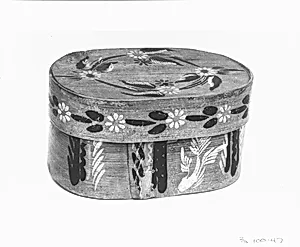
Trinket Box
Unknown Artist
1770–1800
Medium
Cedar
Dimensions
4 1/4 x 8 5/8 x 5 3/4 in. (10.8 x 21.9 x 14.6 cm)
Classification
Trinket box
Culture
American
Department
The American Wing
Museum
Metropolitan Museum of Art, New York, NY
Credit
Gift of Mrs. Robert W. de Forest, 1933
Accession Number
34.100.47
Rights
Public Domain
Tags
Art Historical Context
Nestled in the American Wing of the Metropolitan Museum of Art, this charming Trinket Box, crafted from aromatic cedar between 1770 and 1800, everyday elegance from late colonial America. Measuring a modest 4¼ x 8⅝ x 5¾ inches, its compact size made it ideal for storing jewelry, sewing notions, or other small treasures in a household setting. The choice of cedar—a lightweight, fragrant wood native to the region—was no accident; its natural oils repelled moths and insects, ensuring the contents remained safe and fresh. Adorned with delicate floral motifs, the box reflects the period's fondness for nature-inspired decoration, a hallmark of American vernacular craftsmanship. During the Revolutionary era and early republic, such objects were often made by local artisans using simple tools, blending utility with subtle artistry. Without a known maker, it stands as a testament to anonymous skilled hands that furnished homes across the young nation. Gifted to the Met in 1933 by Mrs. Robert W. de Forest, this unassuming piece offers a window into domestic life, highlighting how beauty infused even the most practical items. Visitors will appreciate its enduring appeal as a slice of 18th-century American ingenuity.