
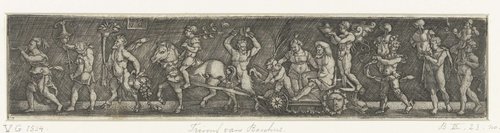
Triomf van Bacchus
Medium
engraving
Dimensions
246; 52
Rights
Public Domain
About this artwork
gravure
Art Historical Context
Behold the *Triomf van Bac* (Triumph of Bacchus a delicate engraving from 1534 by the enigmaticogrammist VG, a 16th-century artist only through this monogram. Measuring a slender 52 mm high by 246 mm wide, this panoramic print captures the exuberant procession of the Roman god of wine in a horizontal frieze format, evoking the grand triumphal parades of antiquity revived during the Renaissance. Created in the Northern Renaissance era, likely in the Low Countries where engraving flourished, the work reflects the period's fascination with classical mythology. Bacchus' triumph—chariots, revelers, satyrs, and vines swirling in ecstatic celebration—symbolized indulgence, fertility, and the senses, themes popular among humanist scholars and collectors. Monogrammist VG's anonymous style aligns with the era's skilled printmakers who emulated masters like Albrecht Dürer. Engraving's precision allowed for intricate line work and mass production on paper, making such vivid scenes accessible beyond elite patrons. This tiny gem, preserved as a "gravure," invites us to marvel at how 16th-century artisans distilled epic revelry into intimate artistry, bridging ancient revels with early modern ingenuity.