
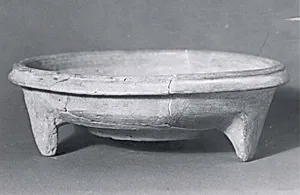
Tripod bowl
Unknown Artist
ca. 8th–7th century BCE
Medium
Ceramic
Dimensions
2 in. (5.08 cm)
Classification
Ceramics-Vessels
Culture & Period
Assyrian · Neo-Assyrian
Department
Ancient Near Eastern Art
Museum
Metropolitan Museum of Art, New York, NY
Credit
Rogers Fund, 1954
Accession Number
54.117.44
Rights
Public Domain
Art Historical Context
### Tripod Bowl Nestled in the Metropolitan Museum of Art's Ancient Eastern Art collection, this *Tripod Bowl* hails from the Neo-Assyrian (ca. 8th–7th century BCE), a when the Assyrian Empire dominated the ancient Near East through military might and cultural splendor. Crafted by an unknown artist from ceramic, this tiny vessel measures just 2 inches (5.08 cm) tall, highlighting the finesse of Assyrian potters who produced both grand palace wares and intimate household items. The tripod form— a bowl elevated on three short legs— was a clever innovation, offering stability on uneven surfaces and possibly allowing for gentle heating or ritual use, such as libations in domestic or temple settings. Fired clay vessels like this were everyday essentials in Assyrian society, reflecting advanced ceramic techniques developed over millennia in Mesopotamia. Though unadorned, its simple geometry speaks to the period's pragmatic artistry amid monumental achievements like the palaces of Nineveh. Acquired through the Rogers Fund in 1954, this bowl invites us to ponder the lives of ancient Assyrians, bridging the gap between imperial grandeur and quiet, functional beauty. A testament to enduring craftsmanship!