
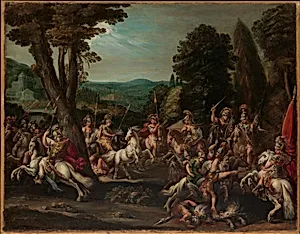
Triumph of the Amazons
1620s
Medium
Oil on canvas
Dimensions
20 1/4 x 26 in. (51.4 x 66 cm)
Classification
Paintings
Department
European Paintings
Museum
Metropolitan Museum of Art, New York, NY
Credit
Bequest of Harry G. Sperling, 1971
Accession Number
1976.100.7
Rights
Public Domain
Tags
About this artwork
This oil on canvas work by Claude Déruet, titled 'Triumph of the Amazons' and created 1620s, represents an important example of artistic production from this period. Claude Déruet's practice contributed to the broader artistic traditions of the time, demonstrating the technical skills and aesthetic sensibilities characteristic of European Paintings artworks in museum collections. The piece reflects the cultural and artistic values of its era, serving as a document of historical visual culture. F...
Art Historical Context
Step into the dynamic world of 17th-century European painting with *Triumph of the Amaz*, an oil on canvas by French artist Claudeéruet from the 1620s. Measuring a compact 20¼ x 26 inches, work captures a thrilling scene of mythological warrior women—the fierce Amazons—locked in battle with soldiers amid rearing horses. Déruet's composition pulses with the energy of conflict, highlighting themes of strength, heroism, and feminine power drawn from ancient Greek legends, which captivated Renaissance and Baroque-era artists. As a prime example of early 17th-century European painting traditions, the piece showcases Déruet's mastery of oil techniques, blending rich colors and dramatic movement to evoke the era's aesthetic sensibilities. Created during a time when history paintings glorified epic narratives, it reflects the cultural fascination with classical antiquity and martial valor in courts across France and beyond. Now preserved in the Metropolitan Museum of Art through the 1971 bequest of Harry G. Sperling, this canvas offers visitors a window into the technical prowess and historical visual culture of its time, inviting closer study of Déruet's contributions to the genre.