
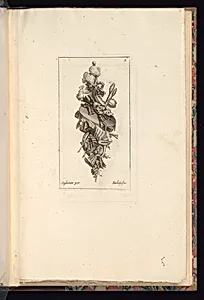
Trophy Design
late 18th century
Medium
Classification
Department
Smithsonian Collection
Museum
Smithsonian American Art Museum
Credit
Purchased for the Museum by the Advisory Council
Accession Number
1921-6-295-5
Rights
Public Domain
About this artwork
Research in Progress
Art Historical Context
Jean-Charles Delafosse a prolific French engraver and ornamental designer (1734–1789), created this *Trophy Design* in late 18th century, a period when France transitioned from the exuberant Rococo style to more restrained Neoclassicism. Delafosse renowned for his intricate prints that served as pattern books for artisans, architects, and decorators, influencing furniture makers, silversmiths, and designers across Europe. "Trophies" in this era were symbolic assemblages—often featuring draped fabrics, weapons, musical instruments, or laurels—evoking classical antiquity and triumph, perfect for adorning grand interiors or public monuments. As a print, likely an etching or engraving, this work exemplifies the reproductive power of the medium, allowing precise designs to be widely disseminated at low cost. Delafosse's meticulous line work captures fluid curves and balanced compositions, blending Rococo playfulness with emerging Neoclassical symmetry. Housed in the Smithsonian American Art Museum's collection, purchased by the Advisory Council, it highlights the transatlantic appeal of French decorative arts during the Enlightenment, when such motifs inspired American Federal-style architecture and furnishings. Though research continues, this piece invites us to appreciate how printed designs democratized high art, bridging elite patronage and everyday craftsmanship in a revolutionary age.