
Tsuba
1830–43
Medium
metalwork
Classification
metalwork
Department
Smithsonian Collection
Museum
Smithsonian American Art Museum
Credit
Bequest of George Cameron Stone
Accession Number
1936-4-1142
Rights
Public Domain
About this artwork
Research in Progress
Art Historical Context
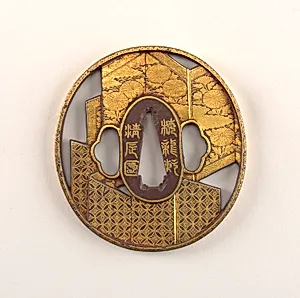
This exquisite tsuba, crafted by the Japanese artist Bairiuken Kiyonaga between 1830 and 1843, represents a refined example of metalwork from Japan's late Edo period. As a sword guard, the tsuba was an essential component of the samurai's katana, positioned between the blade and hilt to protect the hand during combat. By the 19th century, these functional pieces had evolved into miniature works of art, often showcasing intricate designs that reflected the wearer's status and aesthetic sensibilities. Kiyonaga's work highlights the enduring tradition of Japanese metal craftsmanship, where artisans employed techniques such as carving, inlay, and patination to transform durable metals into objects of beauty. Created during a time of relative peace under the Tokugawa shogunate, tsuba like this one often featured symbolic motifs drawn from nature, mythology, or daily life, blending utility with personal expression. Now part of the Smithsonian American Art Museum's collection through the bequest of George Cameron Stone, this piece offers visitors a glimpse into the cultural importance of samurai regalia and the artistic innovations of Japanese metalworkers in the early 19th century. Its presence in an American museum underscores the global appreciation for these finely wrought artifacts.