
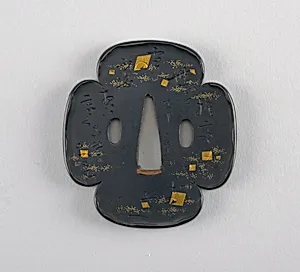
Tsuba
late 19th century
Classification
metalwork
Department
Smithsonian Collection
Museum
Smithsonian American Art Museum
Credit
Bequest of George Cameron Stone
Accession Number
1936-4-413
Rights
Public Domain
About this artwork
Research in Progress
Art Historical Context
This exquisite tsuba, crafted by the Japanese artist Isobe Isshu in the late 19th century, represents a refined example of traditional metalwork. A tsuba serves as the hand guard on a Japanese sword, protecting the wielder while offering a canvas for intricate decoration. Created during the Meiji era, this piece reflects a time when Japan balanced rapid modernization with the preservation of centuries-old artisanal traditions. As metalwork, the tsuba highlights the skill of Japanese craftsmen in shaping durable yet ornate functional objects. Such guards often featured symbolic motifs drawn from nature, mythology, or daily life, underscoring the deep cultural connection between art and the samurai heritage. Though specific details about Isshu’s style remain under research, his work contributes to the broader appreciation of Japanese metal arts in Western collections. Now part of the Smithsonian American Art Museum through the bequest of George Cameron Stone, this tsuba invites visitors to explore the intersection of utility and beauty in Japanese design. Its presence in the collection offers a tangible link to the artistic exchanges of the late 19th century.