
Tubri
Unknown Artist
19th century
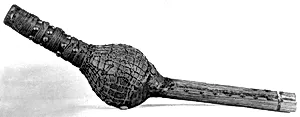
Medium
Gourd, wood, reeds
Dimensions
L. 17.1 cm (6-3/4 in.); 7.6 cm (D. 3 in.)
Classification
Aerophone-Reed Vibrated-single reed cylindrical
Culture
Indian
Department
Musical Instruments
Museum
Metropolitan Museum of Art, New York, NY
Credit
The Crosby Brown Collection of Musical Instruments, 1889
Accession Number
89.4.179
Rights
Public Domain
Art Historical Context
Nestled in the Metropolitan Museum of Art's renowned Crosby Brown Collection of Musical Instruments acquired in 1889 the *Tubri* is a 19th-century aerophone from India. Crafted from humble yet resonant materials—gourd, wood, and reeds—this single-reed cylindrical instrument measures a compact 17.1 cm in length and 7.6 cm in diameter, making it perfectly suited for intimate performances or travel. Its classification as a reed-vibrated aerophone highlights a traditional design where a single vibrating reed produces a distinctive, nasal timbre, evoking the soulful sounds of Indian folk traditions. In 19th-century India, instruments like the *Tubri* played a vital role in regional music, particularly among rural communities in northern areas such as Punjab or Rajasthan. The use of a dried gourd as the main body demonstrates ingenious craftsmanship, channeling breath through a wooden tube and reed to create haunting melodies often accompanying storytelling, dances, or devotional songs. This fusion of natural elements reflects sustainable artistry passed down through generations, blending functionality with cultural expression. Visitors to the Met can appreciate how the *Tubri* bridges art and sound, preserving a slice of India's sonic heritage amid the museum's vast ethnographic treasures. Though its maker remains unknown, its survival speaks to the enduring legacy of vernacular music-making.