
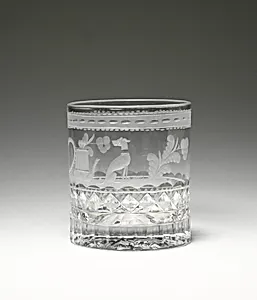
Tumbler
1825–30
Medium
Blown, cut, and engraved glass
Dimensions
H. 3 1/4 in. (8.3 cm); Diam. 2 5/16 in. (5.9 cm)
Classification
Tumbler
Culture
American
Department
The American Wing
Museum
Metropolitan Museum of Art, New York, NY
Credit
Purchase, Judith F. and William H. Hernstadt Gift and Friends of the American Wing Fund, 1982
Accession Number
1982.216
Rights
Public Domain
Tags
About this artwork
This elegant tumbler from 1825-30 represents the pinnacle of early American glass craftsmanship by the renowned Pittsburgh firm Bakewell, Page & Bakewell, which pioneered sophisticated glassmaking techniques in the young republic. The company introduced the sulphide technique to America, embedding white clay cameo portraits within crystal-clear lead glass to create objects of exceptional beauty and remarkable technical sophistication. These tumblers often featured portraits of prominent politica...
Art Historical Context
This elegant tumbler, crafted by the pioneering Pittsburgh glassmakers Bakewell, Page & Bakewell 1825–30, exemplifies the height of early American glass artistry. Made from blown, cut, and engraved lead, its petite form—standing just 3¼ inches tall—combines functionality with refined beauty, showcasing techniques that rivaled European imports. The firm revolutionized American glassmaking by introducing the process, embedding white clay cameo medallions into crystal-clear molten glass to create striking, three-dimensional designs without bubbles or distortions—a feat demanding precise temperature control. These tumblers often bore patriotic portraits of heroes like George Washington, the Marquis de Lafayette, and Benjamin Franklin, doubling as drinking vessels and symbols of democratic pride. Prized by presidents, celebrities, and affluent collectors, they reflected sophisticated tastes influenced by French luxury glass, as noted by a 1828 factory visitor. While many featured human figures, motifs like dogs added whimsical or symbolic flair, highlighting the firm's versatility in decorative engraving and cutting. Housed in The Metropolitan Museum of Art's American Wing, this piece underscores Pittsburgh's rise as a 19th-century glassmaking hub, blending technical innovation with cultural celebration in the young republic.