
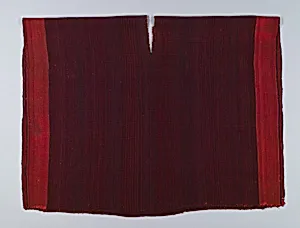
Tunic
Unknown Artist
late 18th century
Medium
Camelid hair
Dimensions
H. 26 1/2 x W. 35 in. (67.3 x 88.9 cm)
Classification
Textiles-Woven
Culture
Aymara
Department
Arts of Africa, Oceania, and the Americas
Museum
Metropolitan Museum of Art, New York, NY
Credit
Bequest of John B. Elliott, 1997
Accession Number
1999.47.229
Rights
Public Domain
Art Historical Context
This late 18th-century tunic, woven from camelid hair by an unknown Aymara artist offers a vivid glimpse into Andean textile mastery. Hailing from the high plateaus of present-day Bolivia and Peru, Aymara people have long been renowned for their intricate weaving traditions, using fibers from llamas and alpacas—naturally resilient and warm materials perfectly suited to the harsh Andean climate. Measuring 26½ x 35 inches, this garment exemplifies the classification of woven textiles, where skilled hands transformed raw camelid wool into a functional yet artistically profound piece of clothing. Historically, such tunics were everyday wear for Aymara men, blending pre-Columbian techniques with subtle colonial influences during the late 18th century. The medium's significance lies in its sustainability and symbolism: camelid hair provided not just durability but also a canvas for cultural expression through patterns and dyes derived from local plants and minerals. Though specific motifs aren't detailed here, Aymara weavings often encoded community identity, rituals, and cosmology. Today, housed in the Metropolitan Museum of Art's Department of Arts of Africa, Oceania, and the Americas through the bequest of John B. Elliott in 1997, this tunic stands as a testament to indigenous ingenuity, preserving Aymara heritage amid centuries of change. Visitors are invited to appreciate the tactile elegance of its weave, a bridge to the living traditions of the Andes.