
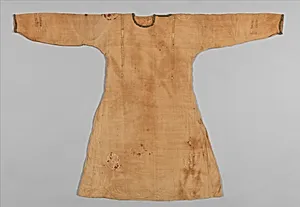
Tunic
Unknown Artist
6th–7th century
Medium
Linen, wool, and silk
Dimensions
H. 40 1/2 in. (102.9 cm) W. 62 in. (157.5 cm)
Classification
Textiles
Department
Islamic Art
Museum
Metropolitan Museum of Art, New York, NY
Credit
Gift of George F. Baker, 1890
Accession Number
90.5.901
Rights
Public Domain
Art Historical Context
Step into the world of early Islamic craftsmanship with this striking tunic from the 6th–7th, now housed in the Metropolitan Museum Art's Islamic Art department. Crafted from a blend of linen, wool, and silk, it an impressive 40½ inches high by 62 inches wide—sized for an adult wearer and designed for everyday use or special occasions. Donated as a gift from George F. Baker in 1890, this textile survivor offers a rare glimpse into pre- and early Islamic garment-making. Textiles like this tunic were central to life in the early Islamic world, particularly in regions like Egypt and the Near East, where weaving traditions blended local fibers with luxurious imported silk, reflecting vibrant trade routes along the Silk Road. The combination of materials highlights advanced spinning and weaving techniques, producing durable yet elegant clothing that could withstand the region's climate. As a classified textile artifact, this tunic underscores the cultural importance of dress in Islamic society, where garments often symbolized status and artistry. Its preservation is remarkable, given the perishability of fabrics, making it a treasured window into the daily elegance of people from over 1,300 years ago.