
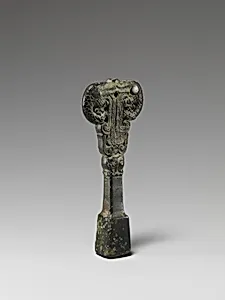
戰國 青銅琴軫鑰|Tuning key
Unknown Artist
5th–3rd century BCE
Medium
Bronze
Dimensions
H. 3 in. (7.6 cm); W. 1 1/2 in. (3.8 cm)
Classification
Metalwork
Culture & Period
China · Eastern Zhou dynasty, Warring States period (475–221 B.C.)
Department
Asian Art
Museum
Metropolitan Museum of Art, New York, NY
Credit
Rogers Fund, 1924
Accession Number
24.102.2
Rights
Public Domain
Tags
Art Historical Context
This exquisite bronze tuning key, known as a *qin zhen ya* (琴軫鑰), hails from China's Warring States period (475–221 BCE a time of intense cultural and technological innovation during the Eastern Zhou dynasty. Crafted between the 5th and 3rd centuries BCE, this small implement—measuring just 3 inches (7.6 cm) high and 1.5 inches (3.8 cm) wide—was used to adjust the strings of the *qin*, an ancient seven-stringed zither revered in Confucian rituals and scholarly pursuits. Acquired by The Metropolitan Museum of Art through the Rogers Fund in 1924, it exemplifies the era's masterful metalwork. Bronze objects like this tuning key highlight the Warring States' advanced lost-wax casting techniques, allowing for intricate details such as the fish motif—a tag that evokes aquatic symbolism tied to prosperity and transformation in ancient Chinese cosmology. Fish designs were popular in decorative arts, blending utility with artistry. Far from mere tools, these accessories reflect music's profound role in elite society, where the *qin* embodied harmony, virtue, and self-cultivation. Visitors will appreciate how this unassuming artifact captures the period's blend of function and finesse, bridging everyday craftsmanship with philosophical ideals. A testament to China's Bronze Age legacy!