
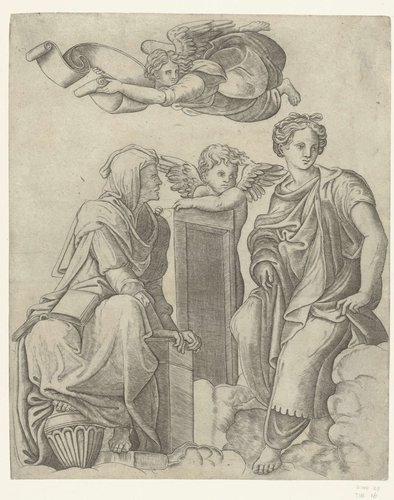
Twee sibyllen en engel en putto
1511 - 1520
Medium
engraving
Dimensions
255; 315
Rights
Public Domain
About this artwork
collector's mark: Lugt 2228
Art Historical Context
**Twee sibyllen en engel en putto** *Giovanni da Brescia, c. 1511–1520* Engraving, 315 × 255 mm Step into the mystical world of Renaissance Italy with Giovanni Antonio da Brescia's engraving *Twee sibyllen en engel en putto* ("Two Sibyls, Angel, and a Put"), created between 1511 and1520. This large-scale print (315 × 255 mm) captures ethereal female sibyls—ancient prophetesses revered in classical mythology and Christian iconography—accompanied by a graceful angel and playful putto (a chubby child figure symbolizing innocence). Da Brescia, a skilled Venetian engraver active in the early 16th century, was renowned for his precise reproductive prints that echoed the grand designs of masters like Titian and Raphael. Engraving, a meticulous intaglio technique where lines are incised into a copper plate for inking and printing, allowed works like this to reach wide audiences beyond original paintings. During the High Renaissance, such prints democratized art, blending pagan prophecy with Christian symbolism to explore themes of divine revelation. The composition's dynamic poses and intricate details showcase da Brescia's mastery of line work, creating depth through cross-hatching and subtle tonal gradations. Bearing a collector's mark (Lugt 2228), this piece reflects its esteemed provenance among connoisseurs. It stands as a testament to engraving's role in preserving and disseminating Renaissance humanism, inviting us to ponder the timeless dialogue between antiquity and faith.