
Twee toneelscènes
1800 - 1900
Medium
brush
Dimensions
285; 180; 135; 198
Rights
Public Domain
About this artwork
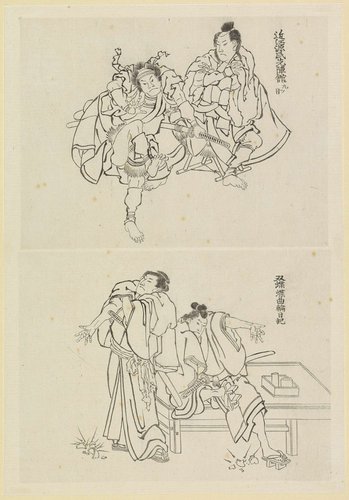
Blad met twee opgeplakte tekeningen met toneelscènes: een met twee samoerai en een met twee figuren bij een lage tafel. Een inscriptie geeft de namen van de stukken.
Art Historical Context
Katsushika Hokusai, the legendary Japanese artist behind iconic works like *The Great Wave off Kanagawa*, created *Twee toneelscènes* (Two Theater Scenes) sometime between 1800 and 1900. This intimate sheet, measuring just 285 × 198 mm, features two brush drawings meticulously pasted together: one lively scene with two samurai in dynamic poses, and another with two figures gathered around a low table, evoking everyday intimacy. A handwritten inscription identifies the kabuki plays depicted, linking these sketches directly to Japan's vibrant theater tradition. Hokusai was a master of ukiyo-e, the "pictures of the floating world" genre that captured the fleeting pleasures of Edo-period life, including popular kabuki performances. These scenes reflect kabuki's theatrical flair—exaggerated gestures, elaborate costumes, and dramatic narratives drawn from history, folklore, and domestic tales. Samurai embody valor and conflict, while the table scene hints at quieter human moments, showcasing Hokusai's skill in distilling complex stories into simple, evocative forms. Rendered in brush and ink, a technique rooted in traditional sumi-e painting, the work reveals Hokusai's preparatory genius. Far from his famous woodblock prints, these pasted drawings offer a rare glimpse into his sketchbook process, blending spontaneity with precision. For visitors, it's a window into 19th-century Japan's cultural heartbeat, where art and theater intertwined to entertain the masses.
About the Artist
Katsushika Hokusai · 1760–1849
Katsushika Hokusai (1760-1849) stands as one of history's most influential artists, a Japanese master who revolutionized the ukiyo-e woodblock print tradition and profoundly shaped Western art. Born in the Katsushika district of Edo (modern-day Tokyo) to an artisan family, Hokusai lived through nearly nine decades of extraordinary creative evolution, adopting over thirty different artistic names t...