
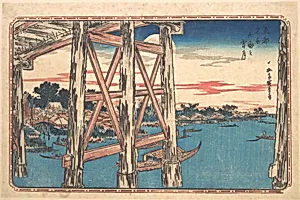
東都名所 両国之宵月|Twilight Moon at Ryōgoku Bridge
Medium
Woodblock print; ink and color on paper
Dimensions
13 3/4 x 8 1/2 in. (34.9 x 21.6 cm)
Classification
Prints
Culture & Period
Japan · Edo period (1615–1868)
Department
Asian Art
Museum
Metropolitan Museum of Art, New York, NY
Credit
The Howard Mansfield Collection, Purchase, Rogers Fund, 1936
Accession Number
JP2460
Rights
Public Domain
Tags
Art Historical Context
**Twilight Moon at Ryōoku Bridge** (*Tōto meisho Ryōgoku no yozuki*), a captivating woodblock print by Utagawa Hiroshige master of the ukiyo-e tradition, transports viewers to the bustling heart of Edo (modern Tokyo) during the period (1615–8). This intimate scene, measuring 13¾ × 8½ inches, captures the iconic Ryōgoku Bridge twilight, bathed in the soft glow of a rising moon. Silhouetted houses, swaying trees, and boats gliding along the river evoke the serene yet lively atmosphere of urban life, blending everyday sights with poetic beauty. Hiroshige's genius shines in his masterful use of ink and color on paper, achieved through the collaborative woodblock process: artisans carved intricate blocks for each hue, layering vibrant blues, indigos, and golds to mimic twilight's subtle gradients. As part of his *Famous Places of the Eastern Capital* series, this print highlights Ryōgoku's cultural vibrancy—a hub for sumo wrestling, fireworks festivals, and riverside revelry—reflecting ukiyo-e's focus on the "floating world" of fleeting pleasures. From The Howard Mansfield Collection at The Metropolitan Museum of Art, this work exemplifies Hiroshige's influence on global art, inspiring Impressionists like Monet with its atmospheric depth and emotional resonance. A window into Japan's golden age, it invites us to pause and savor the moonlit magic of old Edo.
About the Artist
Utagawa Hiroshige · 1826–1869
Utagawa Hiroshige (1797–1858), born Andō Tokutarō, was the last great master of Japanese ukiyo-e woodblock printmaking and one of the most influential landscape artists in history. Born in Edo (modern Tokyo) into a low-ranking samurai family serving as fire wardens, Hiroshige transformed landscape printmaking into a poetic meditation on nature, weather, and everyday life. His revolutionary approac...