
Two Arrows
Unknown Artist
probably 16th century
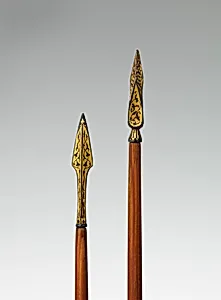
Medium
Wood, textile, lacquer, steel, gold, copper alloy
Dimensions
arrow (36.25.2591a): L. 25 3/4 in. (65.4 cm); Wt. 0.8 oz. (22.7 g); arrow (36.25.2591b): L. 25 15/16 in. (65.9 cm); Wt. 0.8 oz. (22.7 g)
Classification
Archery Equipment-Arrows & Quivers
Culture
Turkish or Iranian
Department
Arms and Armor
Museum
Metropolitan Museum of Art, New York, NY
Credit
Bequest of George C. Stone, 1935
Accession Number
36.25.2591a, b
Rights
Public Domain
Tags
Art Historical Context
In the Metropolitan Museum of Art's Arms and Armor Department, *Two Arrows* (36.25.2591a-b) stand as exquisite examples of 16th-century archery equipment from Turkish or Iranian culture. Likely crafted during the height of the Ottoman Empire or Safavid Persia, these arrows reflect the era's mastery of composite bow warfare, where archery was central to military prowess on the steppes and battlefields. Measuring about 26 inches long and weighing just 0.8 ounces each, their lightweight design optimized flight speed and accuracy for mounted archers. Crafted from wood shafts wrapped in textile, tipped with steel, and adorned with lacquer, gold, and copper alloy, the arrows showcase sophisticated decorative techniques. The use of precious materials like gold suggests they may have belonged to elite warriors or served ceremonial purposes, blending functionality with artistry. Lacquer provided a glossy, protective finish, while metal inlays added both beauty and durability. These artifacts, bequeathed by George C. Stone in 1935, offer a glimpse into the cultural reverence for archery in Islamic heartlands, where such weapons symbolized skill, status, and technological ingenuity. Visitors will appreciate their delicate balance of lethal precision and ornamental splendor.