
Two Grotesque Heads
Francesco Melzi after Leonardo da Vinci, 1510s?
About this artwork
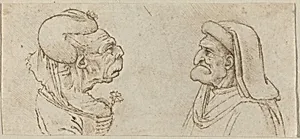
In the intimate world of Renaissance drawings, *Two Grotesque Heads* stands out as a delicate pen and brown ink study attributed to Francesco Melzi, devoted pupil and heir of Leonardo da Vinci. Created in the 1510s(?), this tiny sheet—measuring just 4.5 x 9.9 cm—captures two exaggerated, fantastical faces inspired by Leonardo's fascination with human expression and caricature. Melzi, who inherited Leonardo's sketches after his master's death in 1519, meticulously copied such works, preserving the innovative spirit of High Renaissance draftsmanship. These "grotesque" heads draw from ancient Roman decorations rediscovered in the Renaissance, blending humor, horror, and anatomical precision. Leonardo often explored extreme emotions and physiognomy in his studies, influencing later artists like those in caricature traditions. Melzi's rendition, with its fine lines and subtle hatching, showcases the technical mastery of brown ink on paper—a medium prized for its portability and expressiveness during Leonardo's Milanese and later periods. Housed in the National Gallery of Art as a gift from Mrs. Edward Fowles, this drawing offers visitors a window into the collaborative genius of Leonardo's studio. It reminds us how apprentices like Melzi bridged the master's vision to future generations, turning playful grotesques into enduring studies of the human form.