
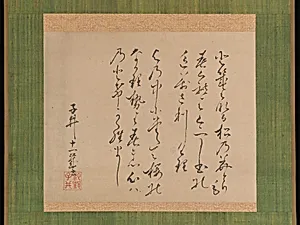
Two Poems from the Collection of Ancient and Modern Poems (Kokin wakashū)
1734
Medium
Hanging scroll; ink on paper
Dimensions
Image: 10 1/2 × 13 1/8 in. (26.7 × 33.3 cm) Overall with mounting: 42 15/16 × 17 7/8 in. (109 × 45.4 cm) Overall with knobs: 42 15/16 × 20 1/2 in. (109 × 52 cm)
Classification
Paintings
Culture & Period
Japan · Edo period (1615–1868)
Department
Asian Art
Museum
Metropolitan Museum of Art, New York, NY
Credit
Mary Griggs Burke Collection, Gift of the Mary and Jackson Burke Foundation, 2015
Accession Number
2015.300.243
Rights
Public Domain
Tags
Art Historical Context
Created in 1734 during Japan's Edo period (1615–1868), this hanging scroll by Ike Taiga (1723–1776) elegantly captures *Two Poems from the Collection of Ancient Modern Poems (Kokinashū)*. Rendered in ink on paper, the work measures 10½ × 13⅛ inches at its core image, designed for vertical display in intimate like a scholar's studio. As a master of the N (Southern School) style literati painting tradition inspired by Chinese models—Taiga infused his with poetic grace, blending calligraphy and subtle imagery. The *Kokin wakashū*, Japan's first imperial anthology of waka poetry compiled in the 10th century, held profound cultural prestige, evoking nature, love, and impermanence. Taiga's inscription revives these ancient verses, showcasing his virtuoso brushwork: fluid ink strokes that dance between legible script and abstract expression. Hanging scrolls like this were unrolled seasonally, fostering meditative appreciation amid Edo Japan's urban refinement. This piece, now in the Metropolitan Museum of Art's Mary Griggs Burke Collection, exemplifies how Edo artists wove classical literature into visual poetry, bridging centuries of tradition and personal artistry for timeless contemplation.