
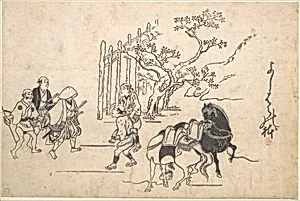
Two Young Samurai
ca. 1680
Medium
Woodblock print; ink and color on paper
Dimensions
10 1/8 x 15 1/5 in. (25.7 x 38.6 cm)
Classification
Prints
Culture & Period
Japan · Edo period (1615–1868)
Department
Asian Art
Museum
Metropolitan Museum of Art, New York, NY
Credit
Gift of Estate of Samuel Isham, 1914
Accession Number
JP807
Rights
Public Domain
Tags
Art Historical Context
Behold *Two Young Samurai*, a captivating woodblock print by Hishikawa Moronobu (1618–1694), created around 1680 during Japan's Edo period (16151868). Moronobu, one of the earliest masters of ukiyo-e "pictures of the floating world"—ioneered the single-sheet color print, capturing the vibrancy of everyday life, theater, and warrior culture in a time of relative peace under the Tokug shogunate. This intimate work (10 1/8 x 15 1/5 in.) depicts two youthful samurai amid horses and trees, evoking the elegance and discipline of the samurai class, symbols of loyalty and martial prowess. Printed with ink and color on paper, the piece showcases Moronobu's innovative woodblock technique, where intricate carvings on wooden blocks allowed for hand-rubbing vibrant hues onto paper. This method revolutionized Japanese art by making affordable, mass-produced images accessible beyond elites, fueling a booming urban print culture in Edo (modern Tokyo). Culturally, it reflects the romanticized ideal of young warriors navigating nature and duty, blending realism with stylized grace. A gift to the Metropolitan Museum of Art from the Estate of Samuel Isham in 1914, this print invites you to step into Edo's dynamic world—where artistry met the spirit of the samurai.
About the Artist
Hishikawa Moronobu 菱川師宣 (Japanese) · 1618 –1694
Japanese, 1618–1694