
Tympanum of a Heger I Kettledrum
Unknown Artist
ca. 500 BCE–300 CE
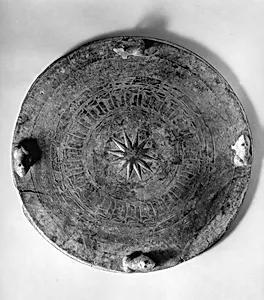
Medium
Bronze
Dimensions
Diam. 27 23/32 in. (70.5 cm)
Classification
Metalwork
Culture & Period
Vietnam · Bronze and Iron Age period, Dongson culture
Department
Asian Art
Museum
Metropolitan Museum of Art, New York, NY
Credit
From the Collection of Nina and Gordon Bunshaft, Bequest of Nina Bunshaft, 1994
Accession Number
1995.70
Rights
Public Domain
Art Historical Context
Nestled in the Metropolitan Museum of Art's Asian Art collection, this bronze tympanum—measuring 27 23/32 inches in diameter—forms the striking front face of a Heger I kettledrum from Vietnam's Dong Son culture (ca. 500 BCE–300 CE). Crafted during the Bronze and Iron Age, it exemplifies the pinnacle of ancient Southeast Asian metalworking. Dong Son artisans were masters of lost-wax casting or sectional molding, producing thin-walled bronzes with intricate reliefs that often depicted mythical scenes, warriors, animals, and geometric motifs symbolizing fertility, power, and cosmology. These monumental drums, of which this tympanum is a key part, held profound cultural importance. Far more than musical instruments, Heger I kettledrums—named after archaeologist Franz Heger who classified them—served as ritual objects in ceremonies, ancestor worship, and communal gatherings. They signified elite status, with their resonant tones believed to invoke spirits and ensure bountiful harvests. This example, from the bequest of Nina and Gordon Bunshaft in 1994, offers a window into Dong Son society's sophisticated artistry and spiritual worldview, bridging Vietnam's prehistoric legacy with enduring traditions. (198 words)