
Umazukushi
Medium
nishikie, with metallic pigments and blindprinting
Dimensions
184; 207
Rights
Public Domain
About this artwork
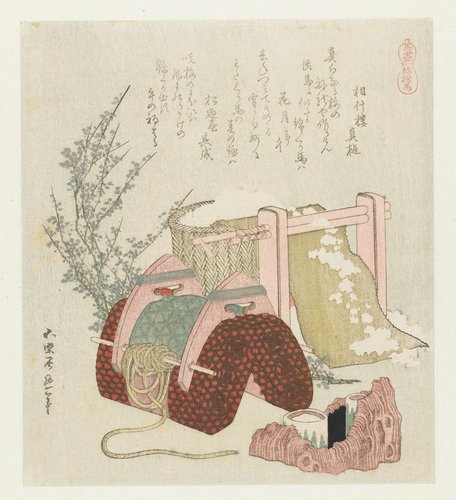
Een zadel met een katoenverwerker, een pruimenbloesemtak en een tabak set. Met drie gedichten.
Art Historical Context
**Umazukushi** (1822) is a delightful surimono woodblock print by Katsush Hokusai, the Japanese artist renowned for his uki-e mastery, including iconic works like *The Great off Kanagawa*. Created during Japan's Edo period, this compact piece (207 × 184 mm) exemplifies era's vibrant print culture, where everyday scenes captured the floating world of pleasure and wit. Surimono, or "printed things," were luxury privately commissioned prints often exchanged among poetry circles, blending artistry with literary play. The composition centers on an ornate saddle adorned with a cotton dyer at work, a delicate plum blossom branch, and a tobacco set—humble yet evocative motifs symbolizing daily life and seasonal beauty. Accompanied by three kyōka poems (humorous tanka variants), it invites viewers to ponder visual puns or *mitate* (parodic substitutions), a clever ukiyo-e convention where objects playfully represent sounds or ideas, possibly spelling out the title "Umazukushi" (a "horse compendium" or miscellany). Hokusai's *nishikie* (brocade print) technique shines here, with lavish metallic pigments evoking shimmering luxury and blindprinting (gauffrage) adding tactile embossing for depth. This fusion of color, texture, and poetry highlights ukiyo-e's cultural role in democratizing art, bridging elite literati and everyday admirers during a time of urban flourishing. A gem for contemplating Japan's ingenious blend of humor, nature, and craftsmanship!
About the Artist
Katsushika Hokusai · 1760–1849
Katsushika Hokusai (1760-1849) stands as one of history's most influential artists, a Japanese master who revolutionized the ukiyo-e woodblock print tradition and profoundly shaped Western art. Born in the Katsushika district of Edo (modern-day Tokyo) to an artisan family, Hokusai lived through nearly nine decades of extraordinary creative evolution, adopting over thirty different artistic names t...