
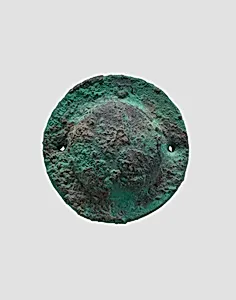
Umbo or stud
Unknown Artist
ca. 9th century BCE
Medium
Bronze
Dimensions
1/2 x 2 1/4 in. (1.3 x 5.7 cm)
Classification
Metalwork-Ornaments
Culture & Period
Iran · Iron Age II, Hasanlu Period IV
Department
Ancient Near Eastern Art
Museum
Metropolitan Museum of Art, New York, NY
Credit
Rogers Fund, 1960
Accession Number
60.20.70
Rights
Public Domain
Art Historical Context
This delicate bronze umbo or stud dating to around the 9th century, originates from Iron Age II Iran during the Hasanlu Period IV. Measuring a modest 1/2 x 2 1/4 inches (1.3 x 5.7 cm), it belongs to the Metropolitan Museum of Art's Ancient Near Eastern Art collection, through the Rogers Fund in 196. Likely a functional ornament—perhaps a shield boss (umbo) or decorative fastener—this small metalwork piece reflects the everyday artistry of a vibrant ancient culture. Crafted in bronze, a hallmark medium of the period, the object demonstrates advanced lost-wax casting or hammering techniques prevalent in northwest Iran. Hasanlu Tepe, the key archaeological site yielding such finds, was a bustling center of elite craftsmanship before its dramatic destruction, revealing a society skilled in producing intricate ornaments for weapons, furniture, or attire. Its cultural significance lies in illuminating Iron Age metallurgy in pre-Achaemenid Iran, where such items symbolized status and technical prowess. Though modest in scale, this stud connects us to the ingenuity of artisans whose work bridged utility and beauty amid a dynamic ancient world.