
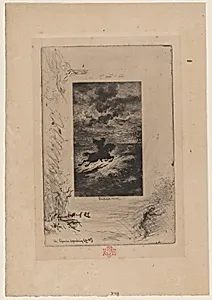
Un Chemin de perdition
Medium
etching and drypoint
Dimensions
plate: 17.4 × 11.4 cm (6 7/8 × 4 1/2 in.) sheet: 25.5 × 17.6 cm (10 1/16 × 6 15/16 in.)
Classification
Department
CG-E
Museum
National Gallery of Art, Washington, D.C.
Credit
Helena Gunnarsson Buhot Collection, Gift in Honor of the Fiftieth Anniversary of the National Gallery of Art
Accession Number
2017.199.13
Rights
Public Domain
Art Historical Context
Félix-Hilaire Buhot's *Un Chemin de perd* (1873) is a striking example of 19th-century French print, created during the etching revival that bridged traditional techniques with emerging modernist sensibilities. Buhot, a master innovator in the medium, crafted this intimate plate—measuring just 17.4 × 11.4 cm—using etching and drypoint.ching involves acid-bitten lines for precision, while drypoint's direct needle scratches produce a soft, velvety burr, allowing Buhot to achieve dramatic tonal depth and atmospheric effects in a single impression. The title, translating to "A Path to Perdition," hints at a narrative of downfall or moral peril, a theme resonant in the Romantic era's fascination with human frailty. Buhot's style, often painterly and richly textured, reflects influences from Japanese prints and contemporaries like Whistler, elevating prints from mere reproductions to standalone artworks. Housed in the National Gallery of Art's Department of Prints (CG-E), this piece from the Helena Gunnarsson Buhot Collection was gifted in honor of the museum's fiftieth anniversary. It invites visitors to appreciate the technical wizardry and emotional intensity of Buhot's vision, a testament to printmaking's golden age.
About the Artist
Félix-Hilaire Buhot · 1847–1898
Félix-Hilaire Buhot was born on July 9, 1847, in Valognes, a small town in Normandy, France, into a modest family—his father a wine merchant and his mother a seller of women's clothes. Orphaned by age seven after losing both parents and his maternal grandmother, he was raised by relatives, including a godfather, and received an early introduction to drawing from his adopted mother's nephew. In 186...