
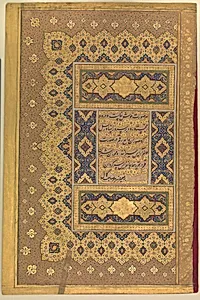
"Unwan", Folio from the Shah Jahan Album
recto and verso: ca. 1630–40
Medium
Ink, opaque watercolor, and gold on paper
Dimensions
H. 15 1/4 in. (38.7 cm) W. 10 1/4 in. (26 cm)
Classification
Codices
Department
Islamic Art
Museum
Metropolitan Museum of Art, New York, NY
Credit
Purchase, Rogers Fund and The Kevorkian Foundation Gift, 1955
Accession Number
55.121.10.41
Rights
Public Domain
Tags
Art Historical Context
Behold the exquisite "Unwan" folio from the Shah Jahan, a masterful work by the renowned Persian calligrapher Mir 'Ali Har, created around 1630–40. This piece, measuring 15¼ × 10¼ inches, hails from the opulent Mughal court of Emperor Shah Jahan—famous for the Taj Mahal—where albums like this one gathered treasures of calligraphy and painting. "Unwan," meaning "title page" or "heading," exemplifies the pinnacle of Persian nasta'liq script, a fluid, elegant style Haravi helped perfect in 16th-century Herat. Crafted with ink, opaque watercolor, and shimmering gold on paper, the folio's intricate designs weave poetic verses into architectural frames of vines, clouds, and floral motifs. These techniques not only highlight the calligraphers' virtuosity but also reflect Islamic art's aniconic beauty, prioritizing rhythm and harmony over figural representation. Gold accents catch the light, evoking the splendor of imperial treasures. As part of the Metropolitan Museum of Art's Islamic Art collection, this codex folio underscores Persia's enduring influence on Mughal culture, bridging Safavid and Indian traditions. Visitors, imagine flipping through Shah Jahan's personal anthology—each page a portal to a golden age of letters and luxury.