
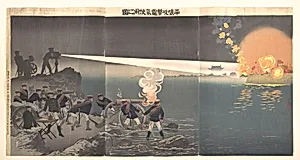
Use of Electricity during the Siege of Pyongyang
Kobayashi Kiyochika, late 19th century
About this artwork
Kobayashi Kiyochika *Use of Electricity during the Siege of Pyongyang captures a pivotal moment in the First-Japanese War (189–95), when Japanese forces besieged the Korean city of Pyongyang. Created in the late 19th century Japan's Meiji period (1868–1912), this triptych woodblock print depicts soldiers operating cannons under the glow of electric searchlights—a striking symbol of Japan's rapid modernization and adoption of Western technology amid traditional warfare. The scene highlights the clash between old and new, as electric lighting pierces the night, illuminating the chaos of battle. As a master of ukiyo-e, Kiyochika blended the floating world genre's dramatic storytelling with contemporary events, moving beyond everyday life to chronicle national triumphs. The triptych format—three panels combining to form a panoramic 14 3/4 x 28 1/4 in. image—allowed for immersive scale, with intricate ink and color on paper showcasing subtle gradations and dynamic compositions. His nuanced shading evoked moonlight and firelight, innovating traditional woodblock techniques to convey modernity's glare. This print, now in the Metropolitan Museum of Art's Asian Art collection, reflects Meiji Japan's cultural shift toward imperialism and technological prowess, offering visitors a window into how art documented a nation's ascent on the world stage.