
Uur van de Dood
1642 - 1644
Medium
etching
Dimensions
90; 133
Rights
Public Domain
About this artwork
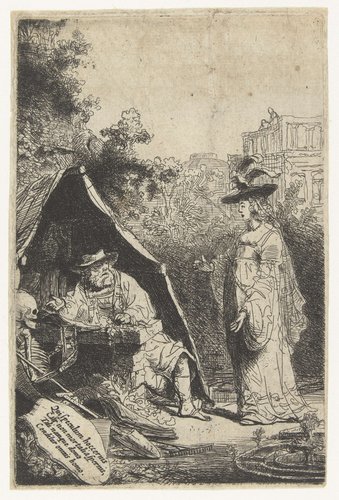
Hoveling trekt zich terug voor bezinning in de tuin van het paleis. Het skelet van de Dood zit naast hem. Een courtisane probeert hem te verleiden maar hij geeft niet toe aan aardse lusten. Hij bekeert haar tot een kuise levenswijze.
Art Historical Context
**Uur van de Dood (Hour of Death)** *Etching by Ferdinand Bol,1642–1644* *133 × 90 mm* Created during the Dutch Golden Age, Ferdinand Bol's etching *Uur van de Dood* captures a poignant moral allegory in miniature scale. A courtier retreats to the palace garden for solemn reflection, accompanied by the figure of Death perched beside him—a stark vanitas symbol reminding viewers of life's transience. As a courtesan attempts to seduce him with earthly temptations, the nobleman resists, ultimately converting her to a path of chastity. This intimate scene, etched with Bol's precise lines, reflects the era's preoccupation with mortality and virtue amid prosperity. Bol, a talented pupil of Rembrandt, mastered etching to produce affordable yet intricate prints that spread moral lessons to a wide audience. The technique's fine detail shines in this small format, allowing dramatic contrasts of light and shadow to heighten the tension between temptation and redemption. Popular in 17th-century Netherlands, such works drew from Baroque drama and Protestant ethics, urging viewers to prioritize spiritual purity over fleeting pleasures. This rare print exemplifies Bol's skill in blending narrative depth with technical virtuosity, offering timeless wisdom on confronting our mortality.
About the Artist
Ferdinand Bol · 1616–1680
As a very young man, Bol moved to Amsterdam, where he worked under the direction of Rembrandt, with whom he formed a friendship. Comment on works: Religious; History; Portraits