
Vairochana, the Supreme Transcendent Buddha
Unknown Artist
11th–12th century
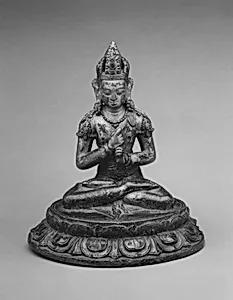
Medium
Gilt-copper alloy with gold paint and blue pigment
Dimensions
H. 7 1/2 in. (19 cm); W. 6 1/2 in. (16.5 cm); D. 5 1/4 in. (13.3 cm); Wt. 6 lbs (2.7 cm)
Classification
Sculpture
Culture & Period
Nepal (Kathmandu Valley) · Thakuri period
Department
Asian Art
Museum
Metropolitan Museum of Art, New York, NY
Credit
Purchase, Friends of Asian Art Gifts, 1991
Accession Number
1991.133
Rights
Public Domain
Tags
Art Historical Context
This exquisite gilt-copper alloy sculpture Vairochana, the Transcendent Buddha, central figure in Vajrayana Buddhism revered as the primordial buddha embodying the dharmadhatu, or ultimate reality. Crafted in Nepal's Kathmandu Valley during theakuri period (11–12th century), reflects the region's vibrant Newar artistic tradition, where Hinduism and Buddhism intertwined under royal patronage. At just 7½ inches tall, this compact piece was likely intended for personal devotion or portable shrines, highlighting the intimate spirituality of medieval Nepalese practice. The sculpture's masterful techniques showcase Thakuri-era innovation: a copper alloy core is meticulously chased and repoussé-formed, then gilded with gold paint for a radiant sheen, accented by vivid blue pigment on the hair and urn. These materials not only symbolize purity and enlightenment but also ensured durability in humid climates. Vairochana's serene posture, with hands in the teaching mudra, exemplifies the period's blend of Indian Pala influences and local finesse, making it a pinnacle of Himalayan metalwork. Housed in the Metropolitan Museum of Art's Asian Art Department, this 1991 acquisition offers visitors a tangible link to Kathmandu's golden age of Buddhist art, where such icons guided meditation and ritual, bridging the earthly and divine.