
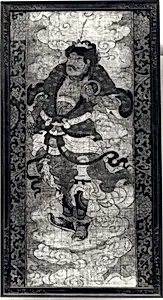
Vaisravana, Guardian of the North
16th century
Medium
Framed painting; ink and color on paper
Dimensions
Image: 33 1/4 x 16 3/4 in. (84.5 x 42.5 cm) Framed: 35 1/2 x 19 in. (90.2 x 48.3 cm)
Classification
Paintings
Culture
China (?)
Department
Asian Art
Museum
Metropolitan Museum of Art, New York, NY
Credit
Rogers Fund, 1919
Accession Number
19.103.3
Rights
Public Domain
Tags
Art Historical Context
Behold the majestic *Vaisravana, of the North*, a16th-century ink and color painting on paper from the Metropolitan of Art's Asian Art. Vaisravana, one the Four Heavenly Kings in Buddhist cosmology, stands as the protector of the northern direction, often depicted as a fierce warrior deity wielding pagoda that dispenses jewels, symbolizing wealth and the vanquishing of evil. Likely originating from China during the Ming dynasty, this artwork reflects the era's deep integration of Buddhism into imperial and popular culture, where such guardians flanked temple entrances to ward off malevolent forces. Crafted by an unidentified artist, the piece exemplifies traditional Chinese painting techniques: delicate ink lines delineate Vaisravana's muscular form and flowing robes, while vibrant colors enhance his authoritative presence and attributes like armor and a fierce expression. The vertical format (33¼ × 16¾ in.) suggests it may have been part of a temple hanging scroll or altar piece, emphasizing hierarchy and spiritual power in a compact, framed composition acquired through the Rogers Fund in 1919. This captivating portrayal invites visitors to ponder the guardian's role in bridging the divine and mortal realms, a testament to East Asian artistry's enduring reverence for cosmic order.