
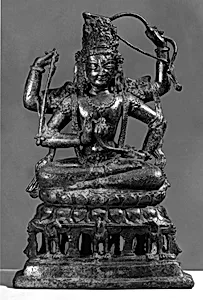
Vajradharma Lokeshvara
Unknown Artist
9th century
Medium
Bronze with silver inlay
Dimensions
H. 15 1/2 in. (39.4 cm); W. 9 1/2 in. (24.1 cm); D. 3 5/16 in. (8.4 cm)
Classification
Sculpture
Culture
Pakistan (NW Frontier Province, probably Swat Valley)
Department
Asian Art
Museum
Metropolitan Museum of Art, New York, NY
Credit
Gift of Abby Aldrich Rockefeller, 1942
Accession Number
42.25.20
Rights
Public Domain
Tags
Art Historical Context
Behold the *Vajradharma Lokeshvara*, a striking 9th-century bronze sculpture from Pakistan's Northwest Frontier Province, likely the Swat Valley—a cradle of ancient Buddhist art. This Bodhisattva, a compassionate deity in Mahayana Buddhism, stands gracefully at 15½ inches tall, embodying divine mercy with attributes like the bow and arrow symbolizing skillful means to enlighten beings. Crafted during a vibrant era when Buddhism flourished along Silk Road trade routes, it reflects the region's fusion of Indian spiritual iconography and local craftsmanship. The medium of bronze with intricate silver inlay highlights masterful techniques: the metal's durability allowed for fine detailing of flowing robes, serene features, and symbolic accessories, while silver accents likely enhanced eyes, jewelry, and sacred motifs for a luminous, otherworldly glow under temple torchlight. Such sculptures were venerated in monasteries, guiding devotees toward enlightenment. Housed in the Metropolitan Museum of Art as a gift from Abby Aldrich Rockefeller in 1942, this rare piece from Swat Valley—once a hub of Gandharan artistry—offers a window into a golden age of Buddhist devotion, where art bridged cultures and cosmos.